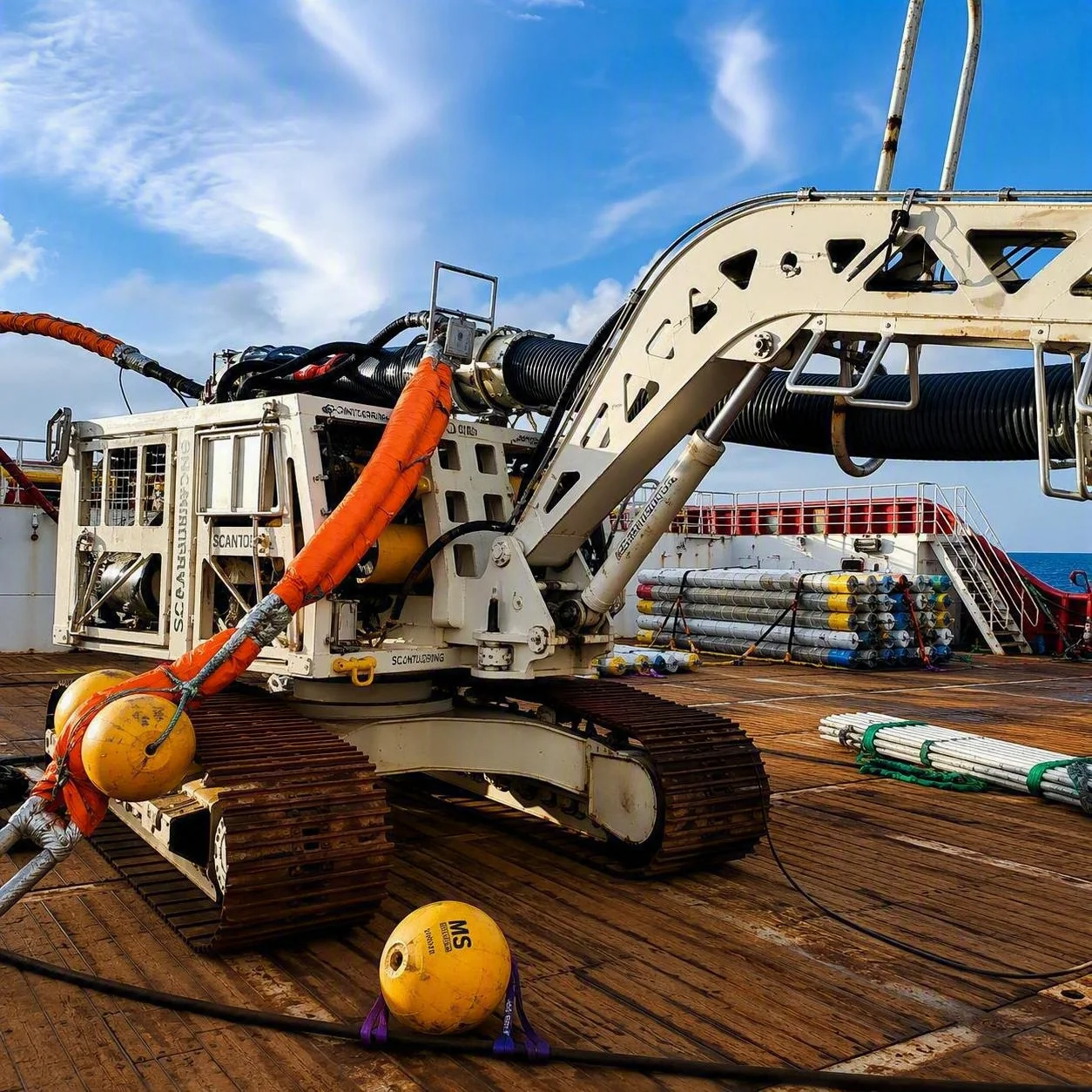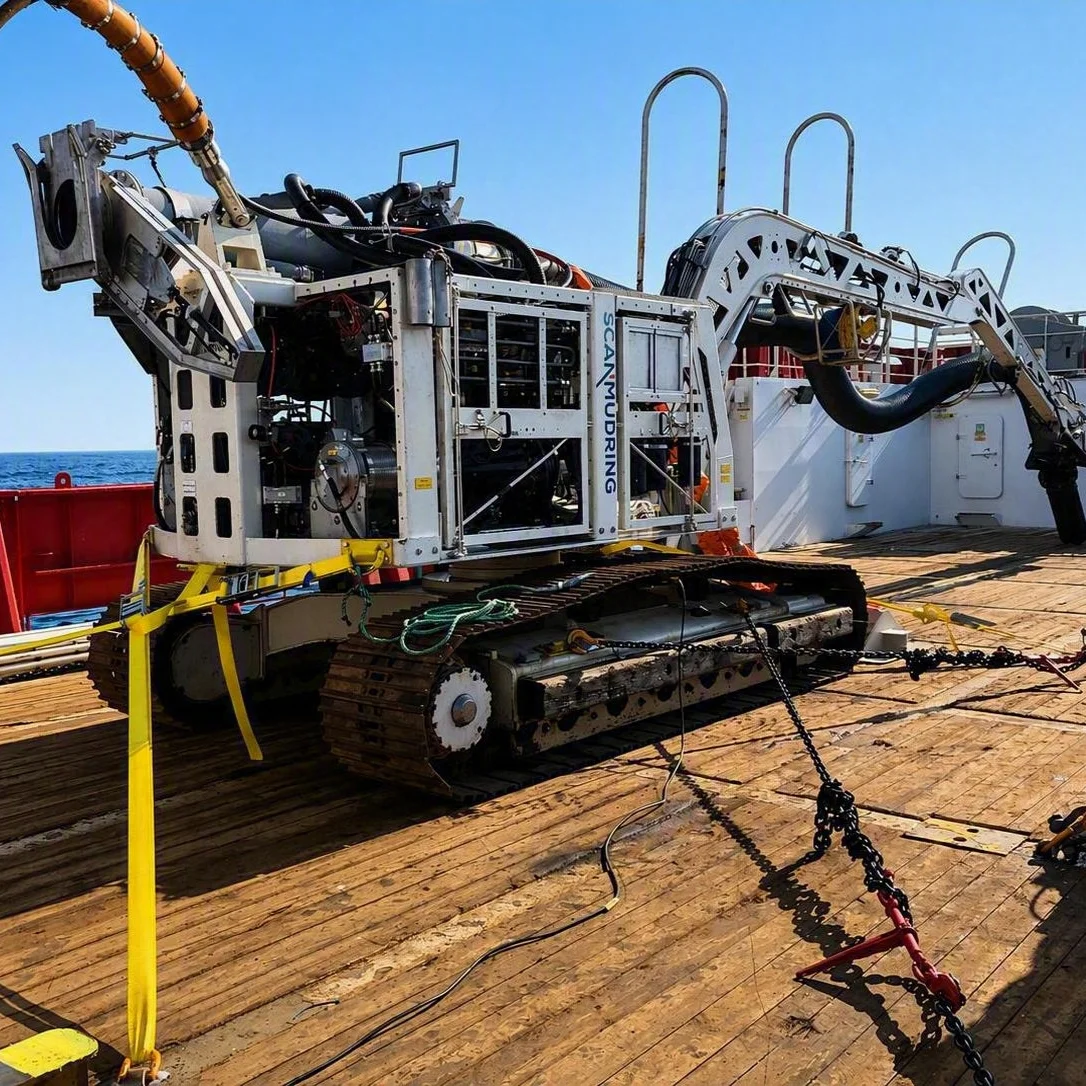
Seabed preparation at Heimdal, North Sea (2020)

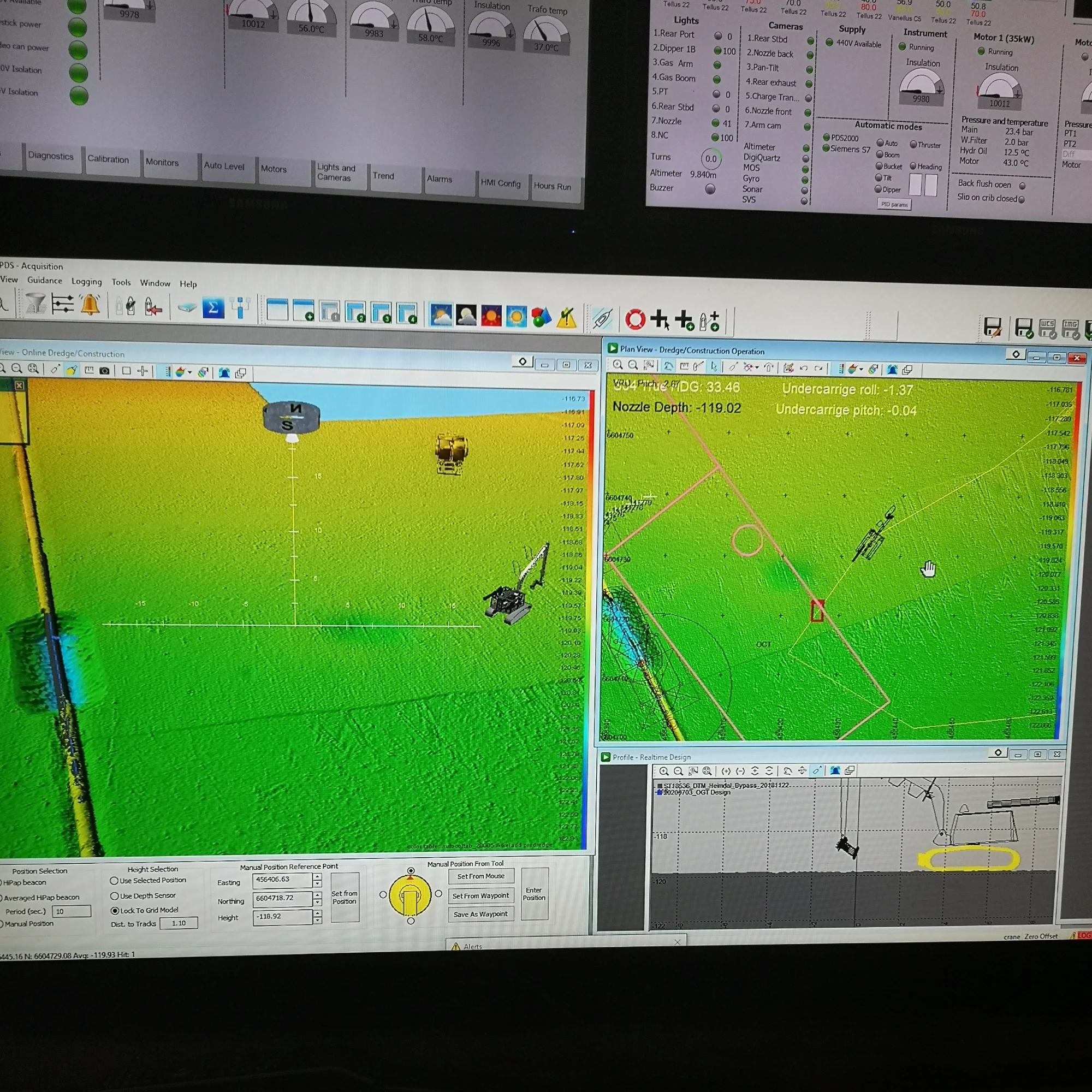
Four pits excavated beneath existing pipelines, plus berm levelling and boulder removal, just outside the platform safety zone. Soil reports specified sand but the seabed was clay throughout. The 20Te Scanmachine handled it in 24 days with no breakdowns.

Location:
Heimdal
Main Spread:
SM20Te
Tooling:
Extended plastic suction nozzle (1,5m), exhaust system, emergency umbilical cutter
Water Depth:
120m
Duration:
24 days
Year:
2020

Scope of work

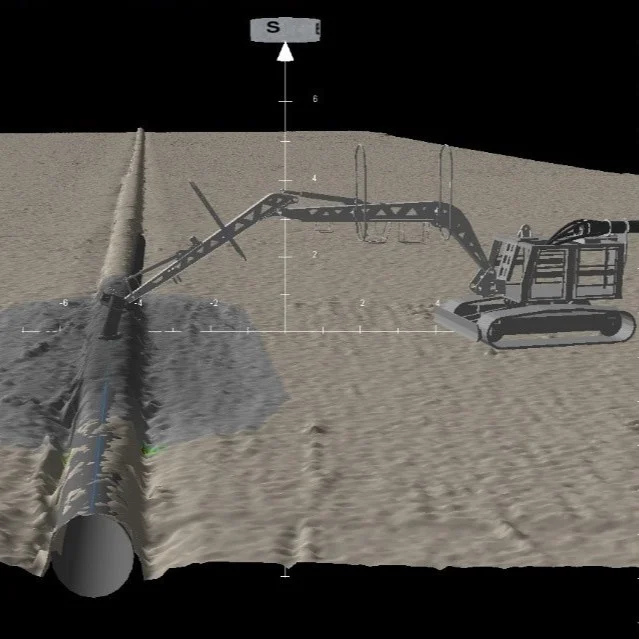
Heimdal gasfield lies in the central North Sea. In preparation for an upcoming by-pass operation, Scanmudring was contracted to excavate four pits beneath existing pipelines, giving PRS access to flush concrete and Force access to scan material quality on the pipes. The scope also covered dredging at the specific tie-in locations, levelling a rock berm at the pipe crossing, and potential boulder removal along the spool locations. 

Planning Phase

Challenges
  • Work close to live subsea assets. The dredging ran just outside the 100-metre safety zone of the platforms, so planning and safety measures were shaped around that constraint.
  • A Large equipment spread. Efficient mobilisation required close preparation between Scanmudring and the client. Scanmudring`s simulation tool was used to model expected production rates from the information available.
  • Client-defined deposit areas. These would normally require and exhaust system, but repositioning hoses and cribs is time-consuming. Scanmudring proposed the inverse: define a no-dumping area instead, and keep exhaust use to a minimum.
Specific Tooling

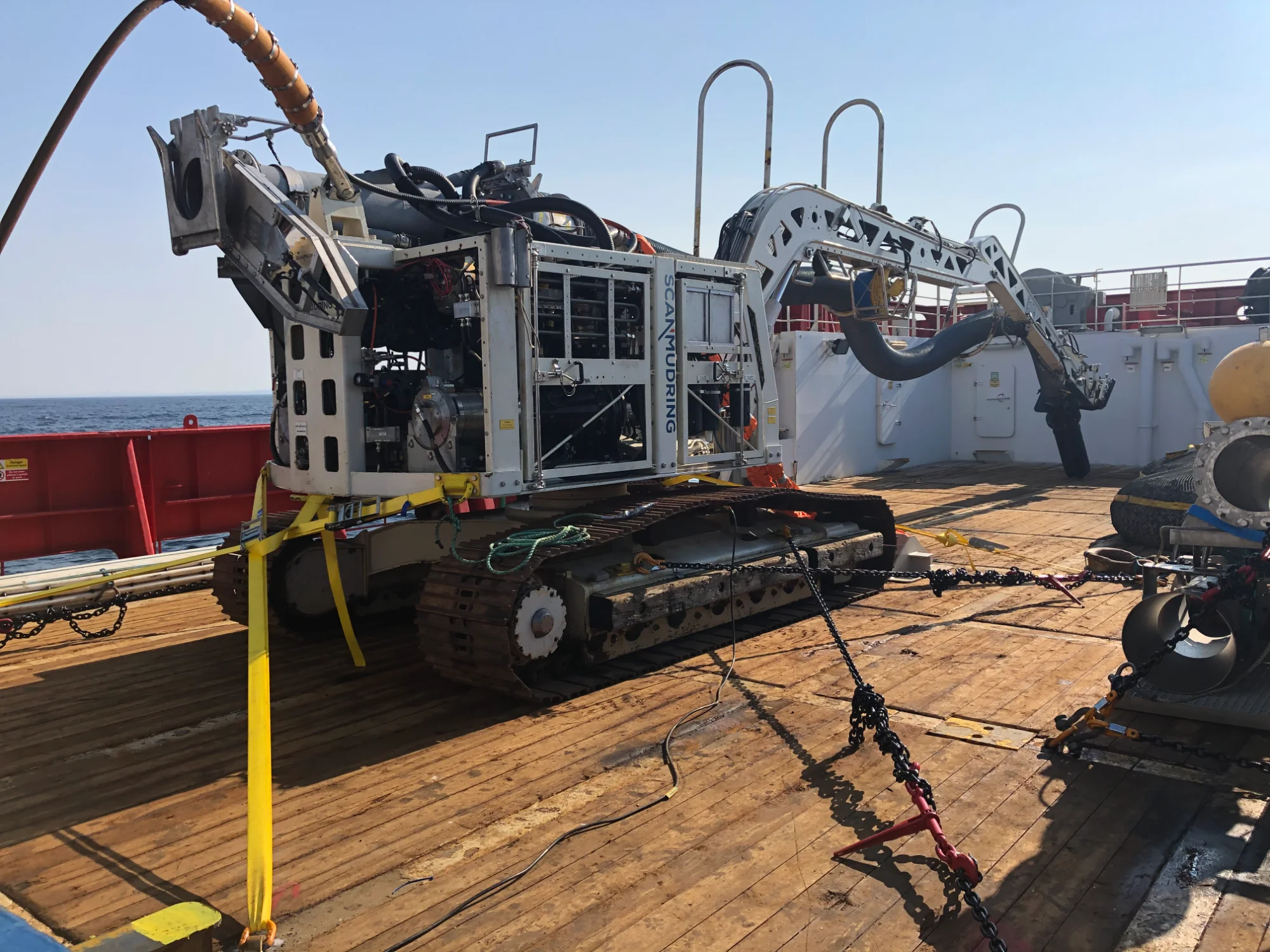
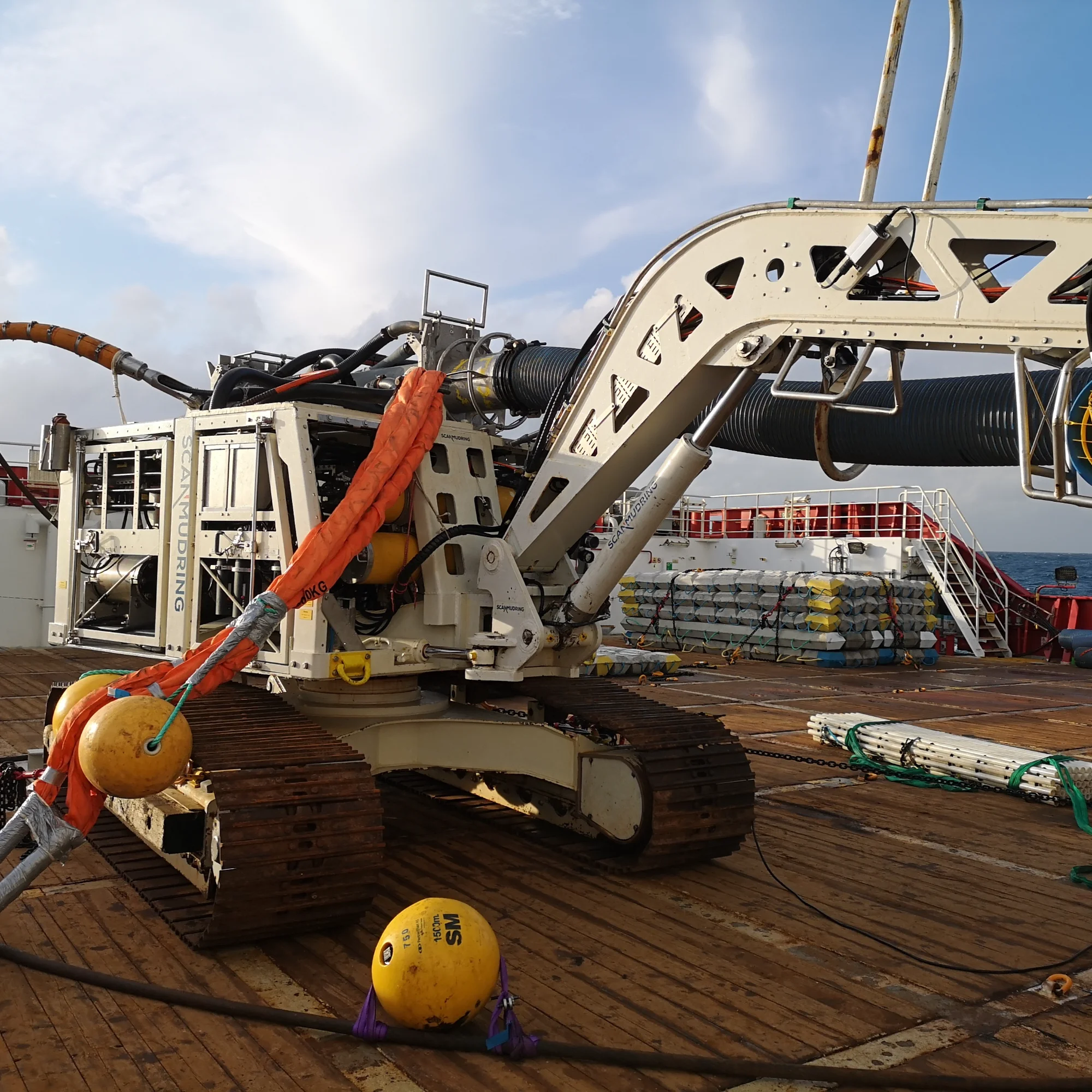
20Te Scanmachine spread including:

  • 1,5m extended plastic suction nozzle
  • Exhaust system for high-precision material placement
  • Emergency umbilical cutter
  • 14” ejector

Project Execution

Dredging
  • The soil was clay, not sand. Reports specified sand at all locations. Within 40m the seabed variated from very soft to stiff clay, and the Scanmachine tracked successfully at every location regardless.
  • The plastic nozzle proved essential for completing the scoupe over soft seabed. Offshore, the client requested the holes to be dredged slightly deeper than originally planned.
Rock berm removal at pipe crossing
  • The rockdump consisted of 5” rocks. A 3,5m corridor was prepared above the existing pipeline with the top of the pipe exposed, sloping from the natural seabed to the pipe on both sides.
  • Levelling was completed without exhaust hoses. Boom slew on the 20Te machine directed the exhaust in a fixed direction, which suited the crossing location.

Conclusion / Lessons Learned

  • The project was executed both safely and efficiently, helped by well-prepared and proactive personnel across all parties.
  • No breakdowns or failures occurred during the campaign.
  • Soil report data proved unreliable. Local variation was extensive, and the expected sand ranged from soft to stiff clay throughout. This was the main learning from the project
  • The 20Te Scanmachine was the right excavator for the operation. The challenging clay at one location demanded its force, and the manipulator reach reduced the number of relocations required.