
Precision Seabed Levelling (2024)

Scanmudring completed high-precision seabed levelling across four offshore foundation areas, combining purpose-built tooling, semi-automatic control and adaptable execution at 119 m water depth.

Location:
North Sea
Main Spread:
Sm40te
Tooling:
2.25 m levelling bucket; DQ depth-reference solution; modified software with semi-automatic levelling
Water Depth:
120m
Duration:
11 days
Year:
2025

Scope of work

The project involved precision seabed preparation at an offshore installation site, where four areas had to be levelled before the foundation structures could be installed. The foundation design required these areas to be prepared to a target level of 119.35 m MSL within a tolerance of ±5 cm. Without this intervention, part of the foundation structure would have required redesign, with potential consequences for cost and delivery.

‍

Scanmudring and the main contractor assessed the feasibility of completing the work with a40Te Scanmachine. The agreed approach combined purpose-built tooling, an upgraded depth reference, modified control software and semi-automatic levelling.
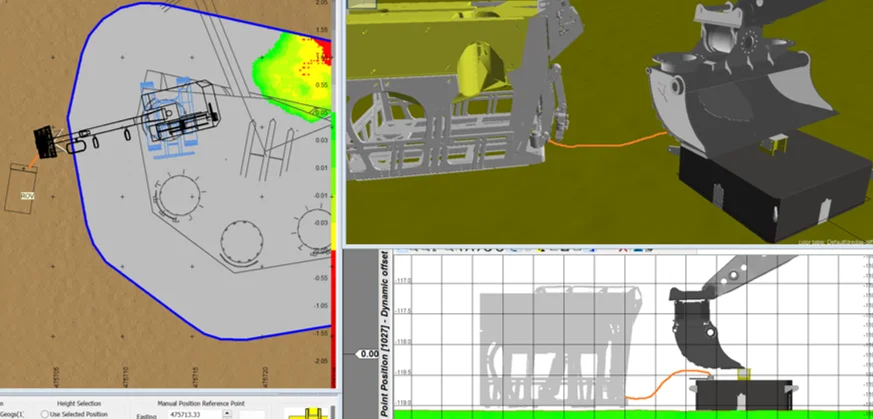
(Excavation)

Planning Phase

The planning phase focused on developing and validating a complete levelling spread capable of meeting the required ±5cm tolerance offshore. Scanmudring designed a new 2.25 m-wide levelling bucket with tilt and two suction inlets, configured the spread with two 16-inch ejectors powered by three 95 kW electric motors, and implemented a DQdepth-reference solution, semi-automatic levelling and software modifications to support precise and repeatable operation.

‍

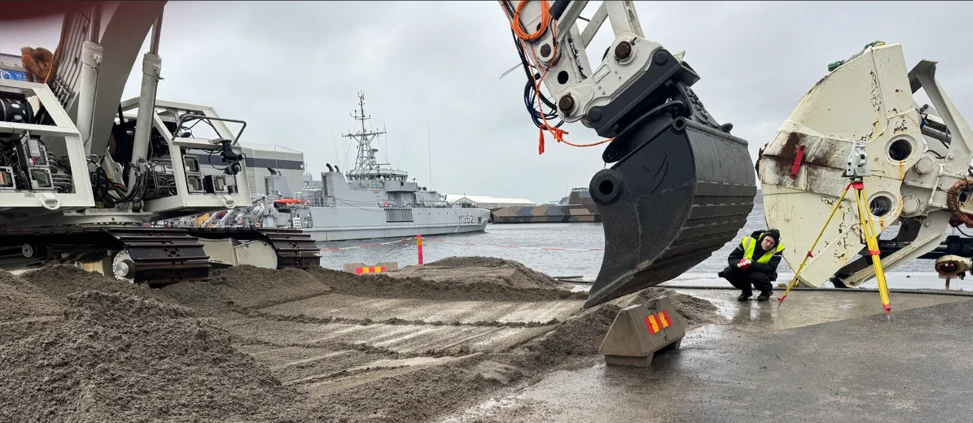
Before mobilisation, the complete concept was tested onshore. Independent measurements with a Leica Nova MS60 showed that the test surface remained within ±3 cm of the target. The results confirmed that the tooling and control concept could achieve the required ±5 cm tolerance under the test conditions and provided the basis for offshore execution.

(Testing with the 2,25 Levelling Bucket)

‍

‍

‍

‍

‍

‍

‍

‍

‍

‍

‍

‍

‍

‍Challenges

  • Achieving the target level of 119.35 m MSL within ±5 cm across four foundation areas.
  • Managing seabed conditions ranging from loose sand to sticky clay.
  • Preventing larger rocks from blocking the bucket’s suction inlets.
  • Maintaining a reliable depth reference in changing sea conditions.
  • Integrating new tooling, software and semi-automatic functions before offshore execution.

Specific tooling

  • 40Te Scanmachine.
  • 2.25 m levelling bucket with tilt and dual suction inlets.
  • Two 16-inch ejectors powered by three 95 kW electric motors.
  • DQ depth-reference solution with nine clump weights for calibration checks.
  • Modified Scanmudring software with semi-automatic levelling.

Project Execution

Each of the four foundation areas was levelled individually. The seabed consisted mainly of sticky clay, with local variations of loose sand and larger rocks. Strainers were added offshore to reduce the risk of blockage at the suction inlets.

‍

The depth-reference solution supported accurate levelling in suitable sea conditions but became less reliable as significant wave height approached 3 m. The team therefore used the planned backup method, combining calibration points and manual placement checks with the automatic bucket and tilt functions to maintain controlled progress.

‍

The four areas required around 263 hours of total operational time, or approximately 11 days. This was 35 hours below the planned allowance of 298 hours.

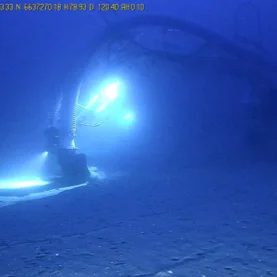
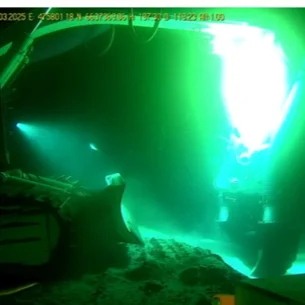
(Under operation)
(Under operation)

Conclusion / Lessons Learned

All four foundation areas were completed and approved to the required target level and tolerance, allowing the planned foundation design to proceed without modification.

‍

The operation combined a 40Te Scanmachine with a purpose-built levelling bucket, dual 16-inch ejectors and a project-specific control setup. The depth-reference solution supported the work in suitable sea conditions, while a planned backup method was used when wave conditions affected accuracy.

‍

Approximately 629 m³ was removed. Total reported operational time was around 263 hours, or approximately 11 days, which was 35 hours below the planned allowance of 298 hours. With no reported breakdowns or equipment failures, the project demonstrates Scanmudring’s ability to combine tailored tooling, software development, onshore testing and adaptable offshore execution for demanding seabed preparation.

  • The automatic levelling and bucket-tilt functions performed effectively.
  • Adding strainers reduced blockage risk from larger rocks.
  • A planned backup method maintained progress when wave conditions reduced depth-reference accuracy.
  • Future applications could benefit from direct communication with the depth-reference system, optimised suction geometry and surface treatment to reduce clay adhesion.