Post-lay trenching of a 16 and 22 - inch pipeline (2025-2026)
Scanmudring delivered flexible, high-capacity trenching for critical pipelines and an umbilical offshore West Africa, adapting efficiently to complex seabed conditions and securing reliable subsea protection.
The development required post-lay protection of subsea infrastructure supporting a major offshore gas project. The wider offshore system included unmanned well head facilities and an export pipeline connecting the offshore production area to an onshore treatment facility. Scanmudring’s role was to provide the required protection through post-lay trenching and selected mechanical backfilling across the pipeline and umbilical scopes.
Scanmudring’s scope comprised trenching approximately 6 km of 16-inch pipeline, around 38 km of 26-inch pipeline with a 4-inch fibre-optic cable piggyback, and approximately 6.3 km of umbilical. The contracted work also included mechanical backfilling on selected sections of the 26-inch pipeline.
Planning Phase
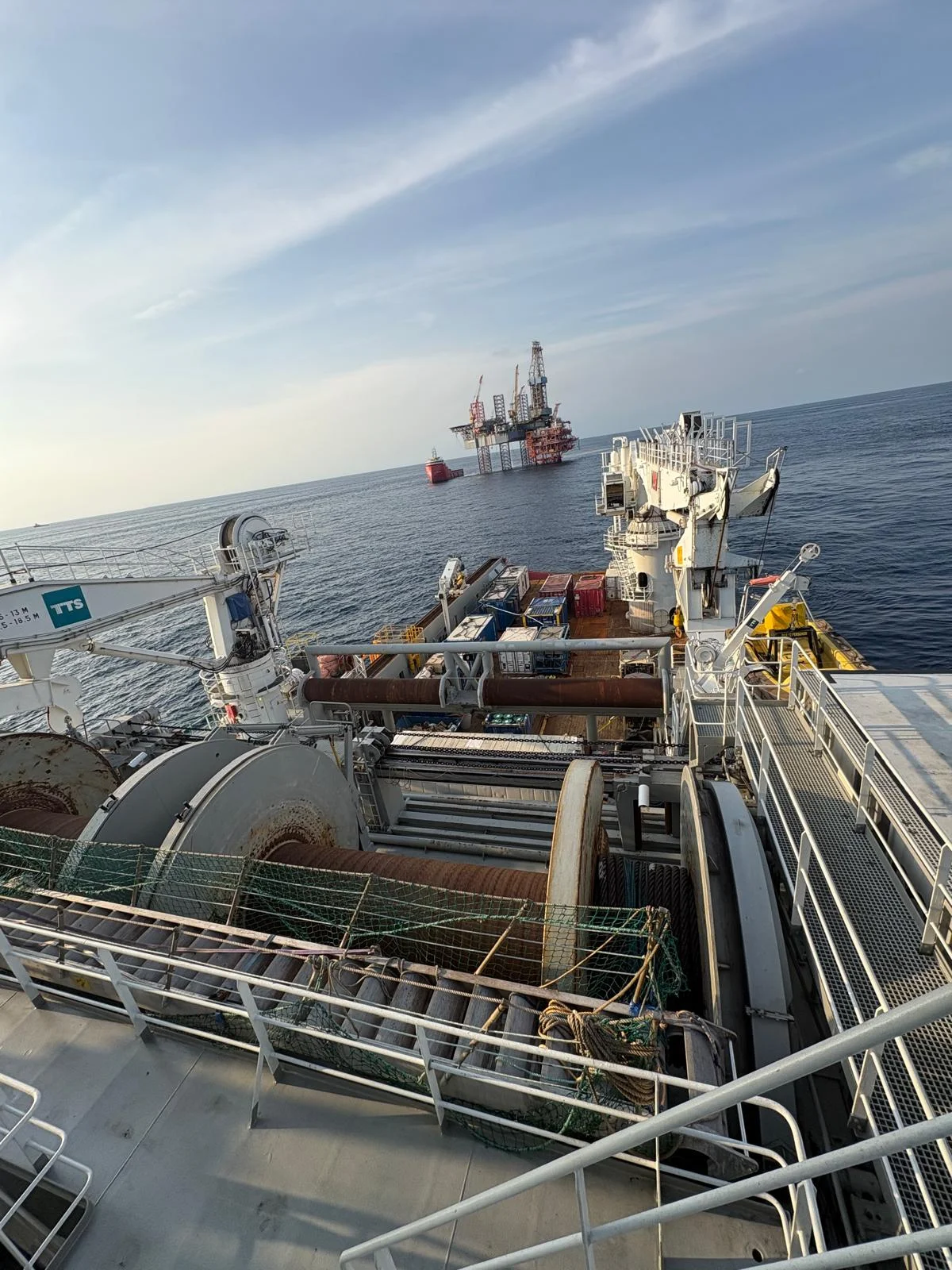
The campaign required one excavation spread to support several distinct scopes across two offshore construction vessels. One vessel was used for the 16-inch pipeline, while the second supported the 26-inch pipeline, umbilical trenching and mechanical backfilling.
Planning covered recurring technical meetings, vessel interfaces, project-specific mobilisation and operating procedures, wet testing, survey integration and preparation of the three-dimensional monitoring environment. A mechanical excavation tool was evaluated as a contingency for very hard seabed, but was not deployed after the client selected concrete mattresses for the remaining non-removable sections.
Challenges
Significant variation in seabed composition and hardness along the 26-inch route.
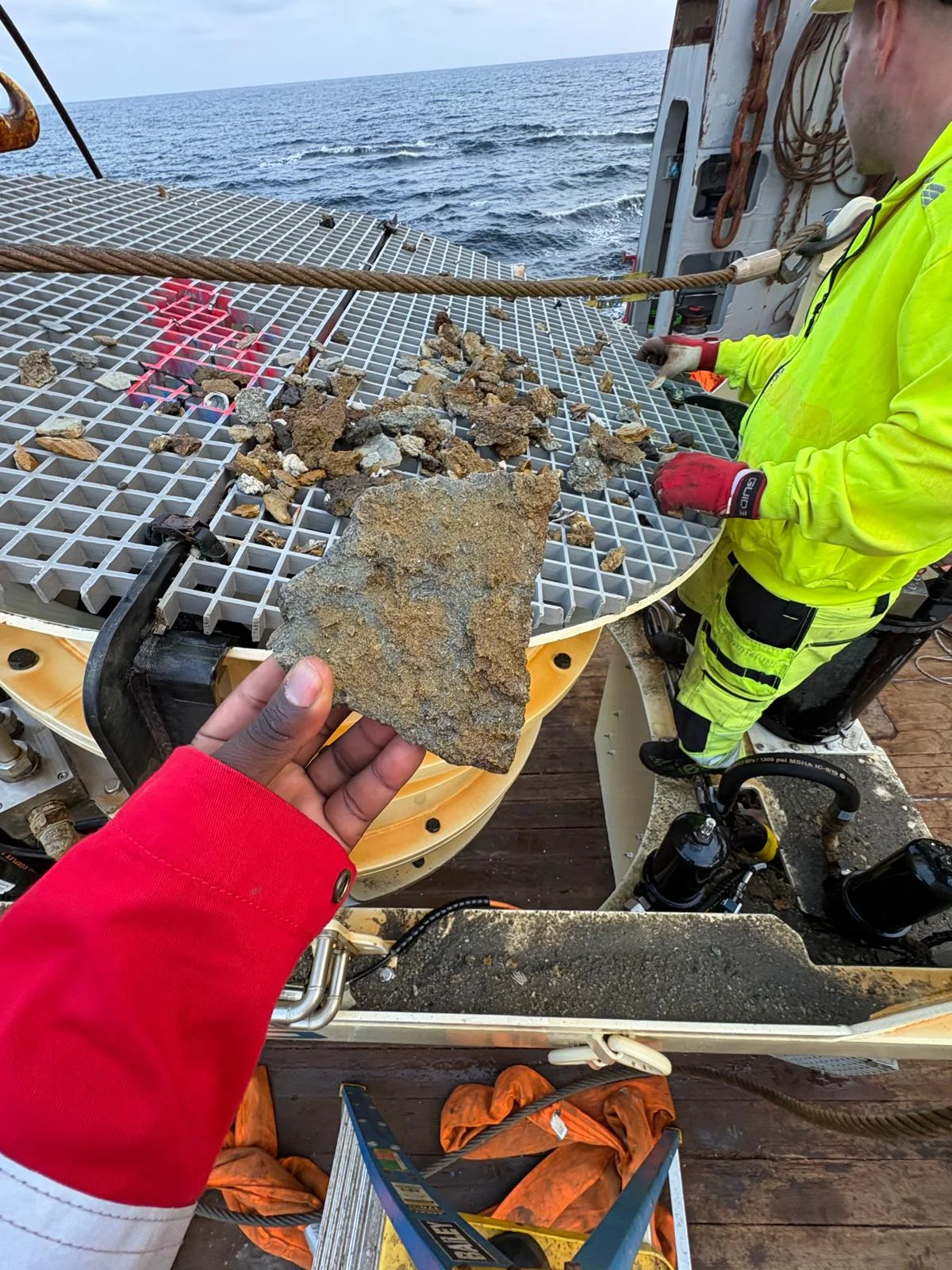
Consolidated coral and sandstone exceeding the effective capability of controlled-flow excavation in some sections.
Rapid natural backfill in loose sand, limiting the time available for the pipeline to settle.
A 26-inch pipeline with a 4-inch fibre-optic cable piggyback requiring controlled trenching and verified cover.
Coordination of a long-duration scope across two offshore construction vessels.
Specific tooling
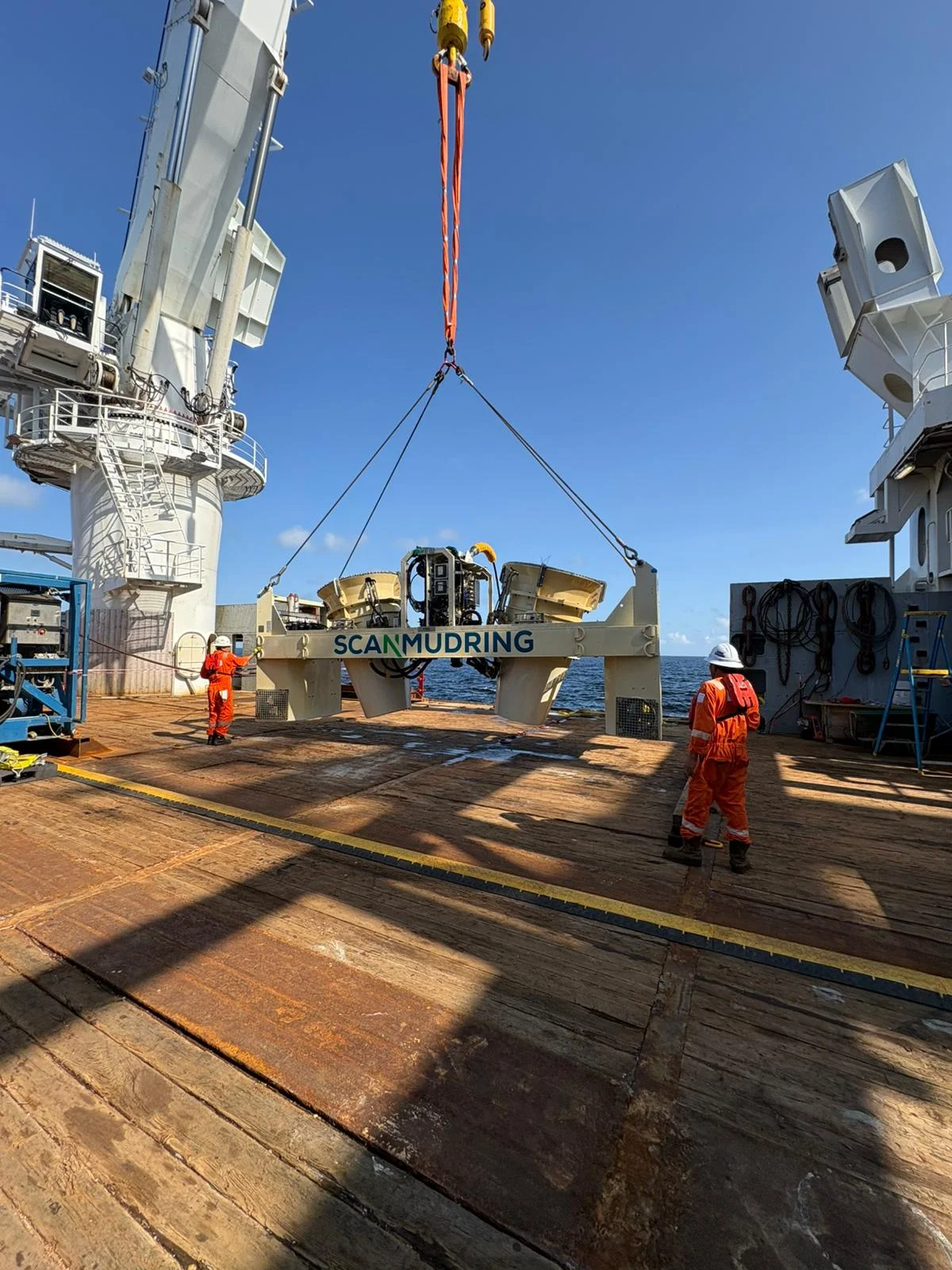
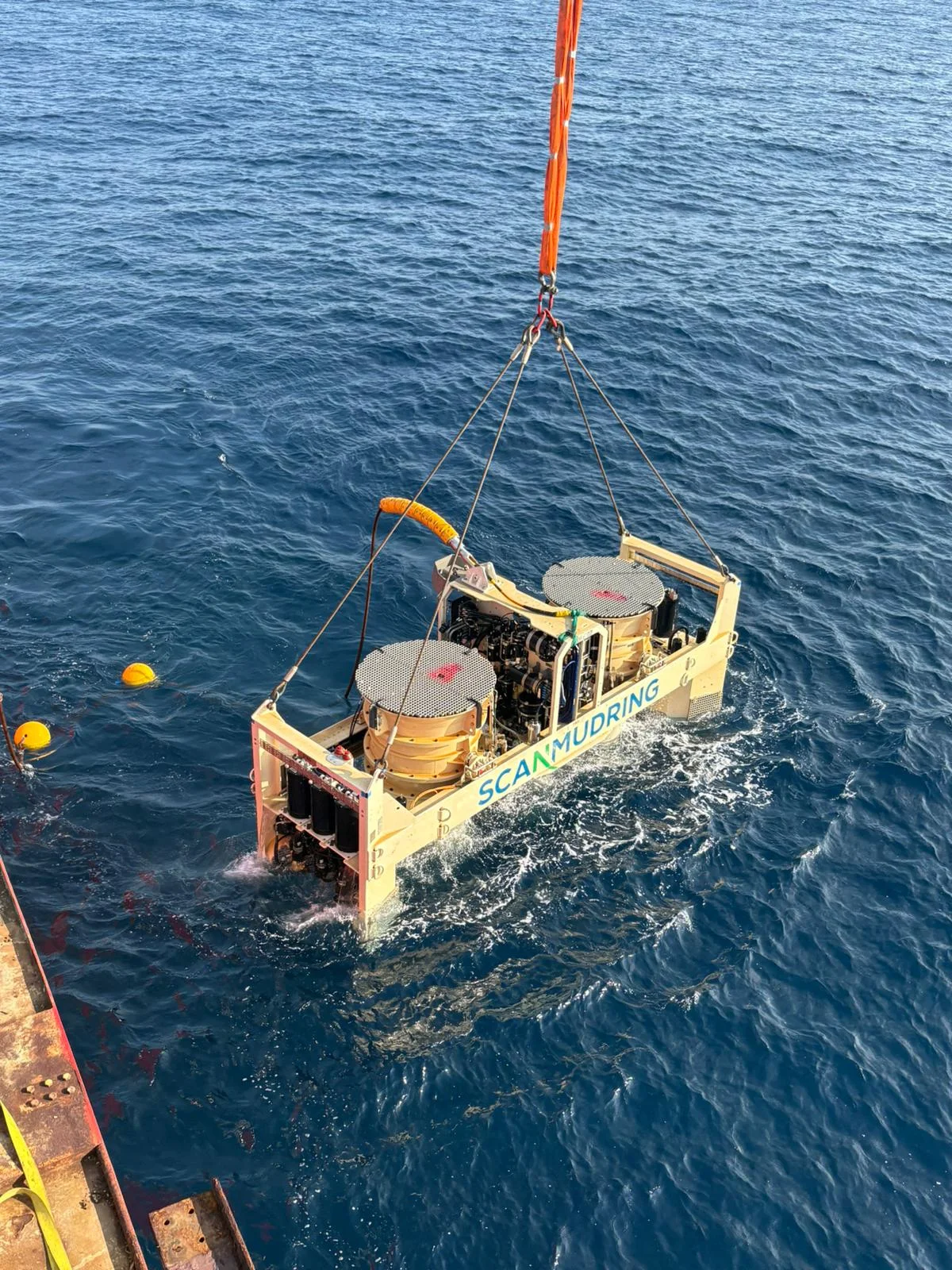
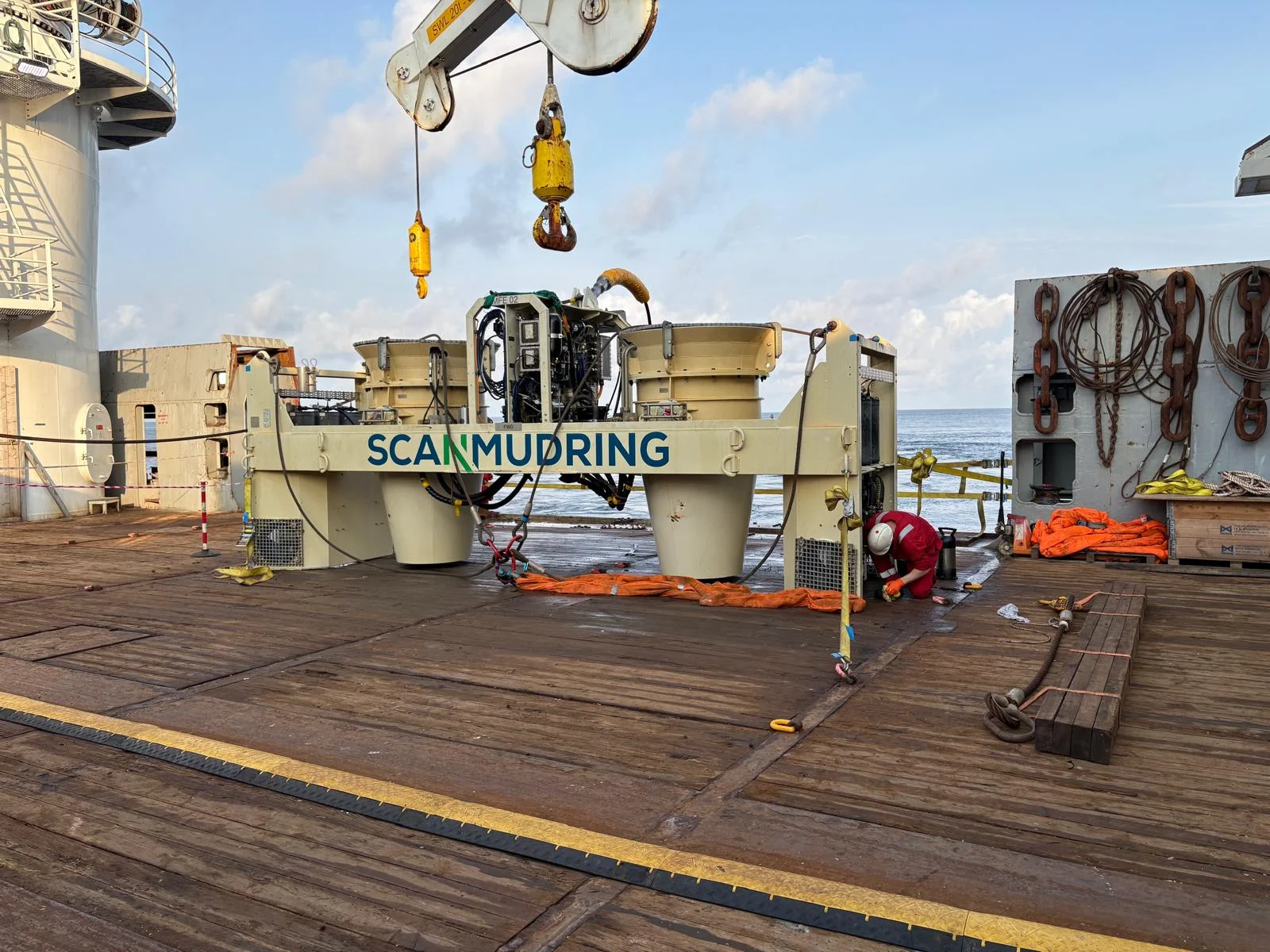
SCANCFE 9000 controlled-flow excavation spread.
Interchangeable 0.6 m, 0.8 m and 1.0 m outlet nozzles.
PDS 3D monitoring integrated with vessel survey and positioning systems.
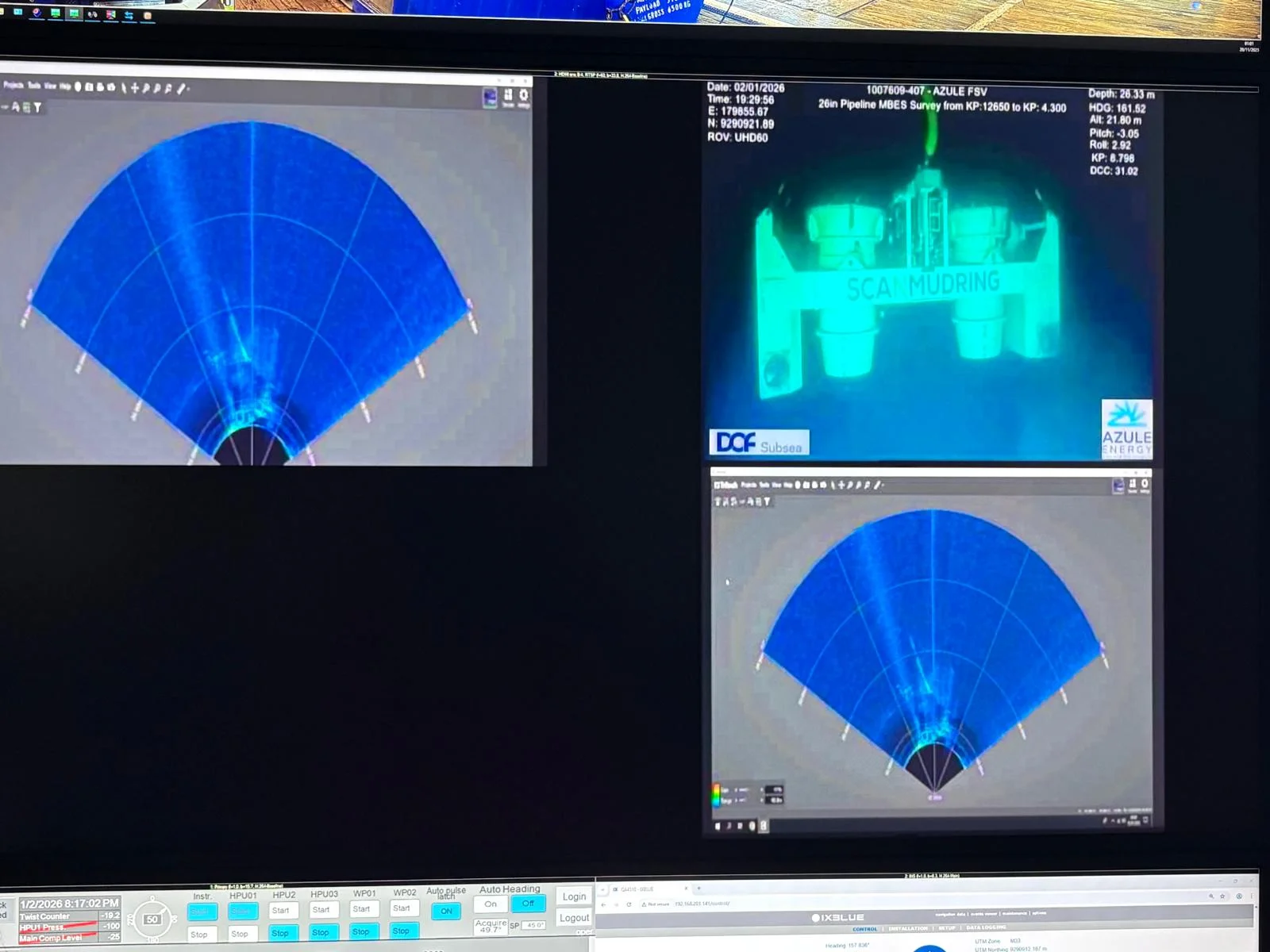
Real-time multibeam echo sounder data and post-survey data used to assess trench performance.
A mechanical excavation tool assessed as a contingency for very hard seabed, but not deployed.
(SCANCFE 9000)
Project Execution
The 16-inch pipeline scope achieved 100% completion over approximately 6 km. Survey data recorded around 36,500 m³ of relocated material and approximately 133 hours of operational trenching, equivalent to an estimated production rate of about 275m³/h. One equipment failure resulted in approximately 1 hour and 45 minutes of breakdown time.
For the 26-inch pipeline, Scanmudring trenched approximately 30 km of the approximately 38 km route and relocated around 208,000 m³ of material. Approximately 8.6 km remained untrenched because the route included restricted-access areas, crossings, shallow-water section sand non-removable hard seabed. Roughly 3.8 km consisted of very hard material, for which the client selected concrete mattresses as the alternative protection solution.
The approximately 6.3 km umbilical scope achieved 100% completion, with around 36,000 m³ of material relocated. SCANCFE 9000 was also used to mechanically backfill four selected cross-sections of approximately 100 m each on the 26-inch pipeline, totalling around 0.4 km, to support the installation of concrete mattresses.
(Under operation)
Adapting to the seabed
The most demanding aspect of the campaign was the variation between extremely hard seabed and rapidly moving loose sand. In selected sections of the 26-inch route, consolidated coral and sandstone limited progress even after repeated passes. The team reduced vessel speed and applied multiple cutting passes. SCANCFE 9000 progressed through parts of these sections, while the remaining non-removable areas were assigned an alternative protection solution.
In areas of loose sand, real-time multibeam echo sounder data showed trench depths averaging approximately 2.2 m. However, the sand flowed rapidly back into the trench, reducing the achieved pipeline lowering before the post-survey. Scanmudring adapted the method by introducing a higher-speed Flush Pass at 3–5 m/min. The increased turbulence delayed the natural backfill and gave the pipeline more time to settle into the trench.
Learning from the initial trials led to a change from 0.8 m to 1.0 m outlet nozzles and an optimised nozzle orientation. Across the documented trial sections, compliance improved from approximately 25% to 70%, from about 53% to 78%, and from around 11% to 94%. The final two sections achieved an average top-of-pipe cover of approximately 0.9 m after the Flush Pass.
Conclusion / Lessons Learned
Using the SCANCFE 9000 controlled-flow excavation spread, Scanmudring completed approximately 6 km of 16-inch pipeline trenching, approximately 6.3 km of umbilical trenching and around 0.4 km of selected mechanical backfilling. The team also trenched approximately 30 km of a 38 km 26-inch pipeline route. Across the three trenching scopes, the documented relocated volume was approximately 280,500 m³.
The campaign demonstrated that controlled-flow excavation can be adapted to significant changes in seabed response by adjusting vessel speed, nozzle diameter and nozzle orientation. Combining real-time trench data with post-survey results was essential for identifying rapid natural backfill and refining the method. The 16-inchpipeline and umbilical scopes reached 100% completion, and no non-conformance reports, observations or improvement notices were recorded in the client’s project system.